True Round Metal Boatbuilding
by way of
'Approximate Development'
'Approximate Development' does not use any traditional arcane and obscure skills such as line heat or English Wheeing. The hull plating is shaped by time tested metalworking methods. There is nothing vague about the method. You can see the process thoroughly by following the building of the "Bezier 12.5" and reading my book 'True Round Metal Boat Building' - Approximate Development. Available at Amazon.
- Shell panels are shaped using a cold forming "Press Break" process. The method is simple, consistent, and predictable.
- Approximate Development' outputs full size flat patterns of the hulls three dimensional surface. Information such as bend angle, forming line, and reference dimensions needed to form the flat patterns to its original three dimensional shape are provided with the each patterns.
- The curved sections of the hulls shell plating will fit together, first time - every time.
- The pre-engineered design and fabrication method enables an average person to build a true round bottom hull using the same skills as required in Hard Chine construction.
- The result is the unmistakable beauty of a True Round hulls uninterrupted graceful lines curving to meet the waterline.
|
|
Hull Configerations
One Surface Design:
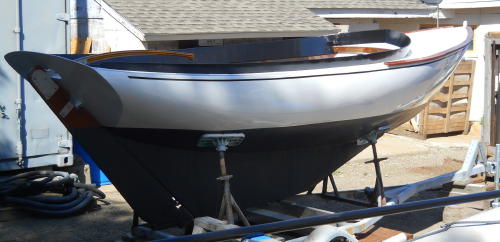
The Single surface ‘True Round’ Steel or Aluminum Bezier hull, shown below could have also been designed for Fiberglass construction. Any hull designed for fiberglass construction can be built in steel or aluminum using 'Approximate Deveploment'.
Two Surface Design:
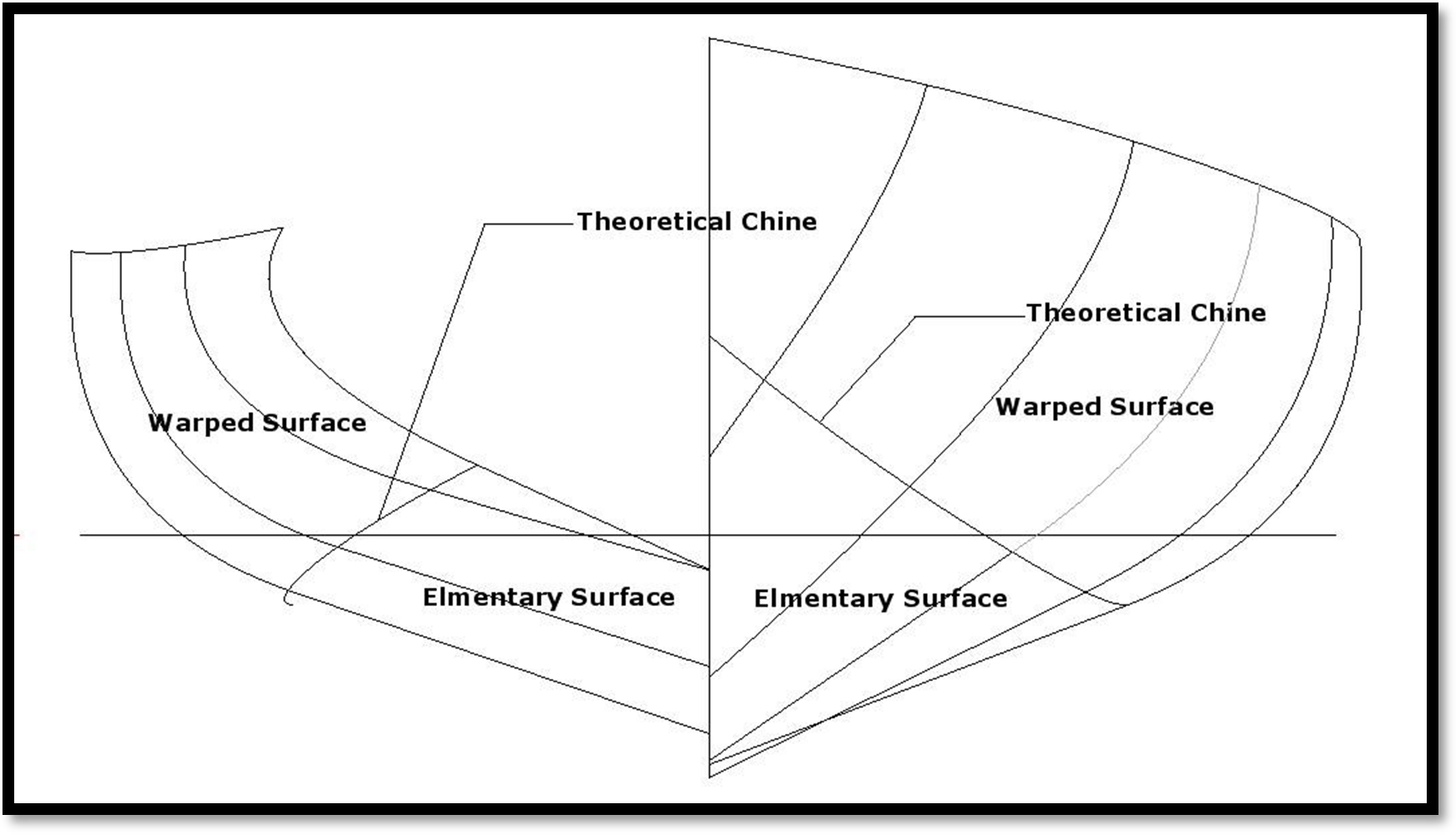
In a Double surface design, the upper surface is True Round and runs from the sheer-line, around the turn of the bilge to a theoretical chine line. The bottom surface is a Developable surface. It starts at the theoretical chine line and ends at the Center Line of the hull.
The theoretical Chine Line that separates the two surfaces is visible in the hulls ‘Lines’ drawings. However, in the finished hull the Chine Line blends the two distinct surfaces into one by flowing tangent and seamlessly into one single perceived surface.
Three Surface Designs:
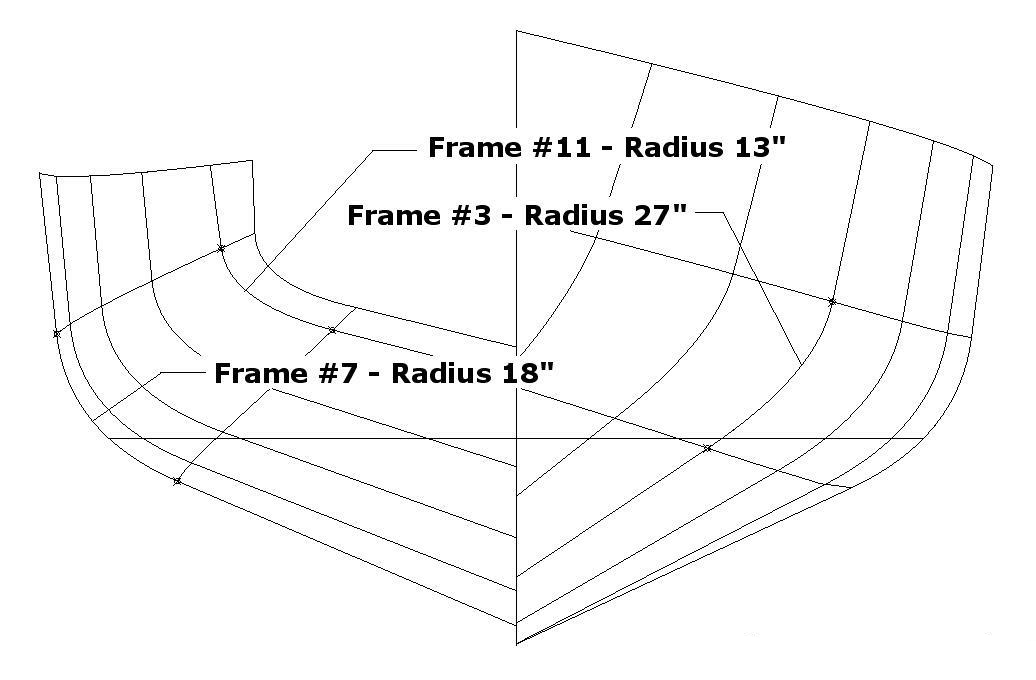
Three surface 'Approximately Developed' designs are not to be confused with ‘Radius Chine’ designs where a ‘Single Constant Radius’ is placed between two developable surfaces along the entire length of the hull. 'Radius Chine' was developed somewhere back in the 1980’s to resemble a True Round hull.
In the drawing below a True Round surface is placed between two developable surface instead of a 'Single Constant Radius' surface, adding value by overriding the restrictions imposed by the ‘Radius Chine’ design method itself.
All Copyrights Reserved - MetalSailboats.com
2009 - 2026
|
|
|
|
 |
 |
|
|
|
|
|
|
|
|